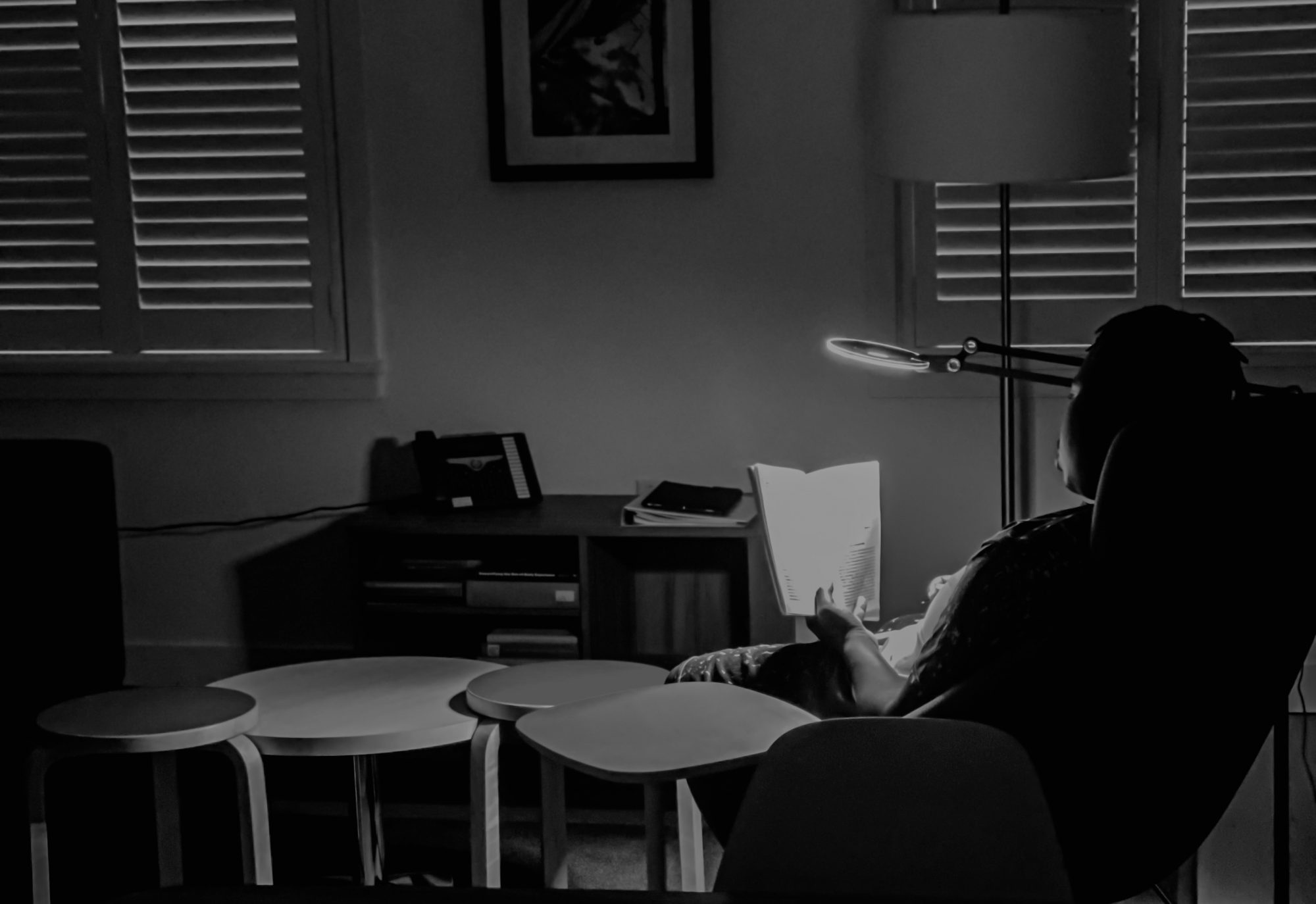

The Echo of 2099
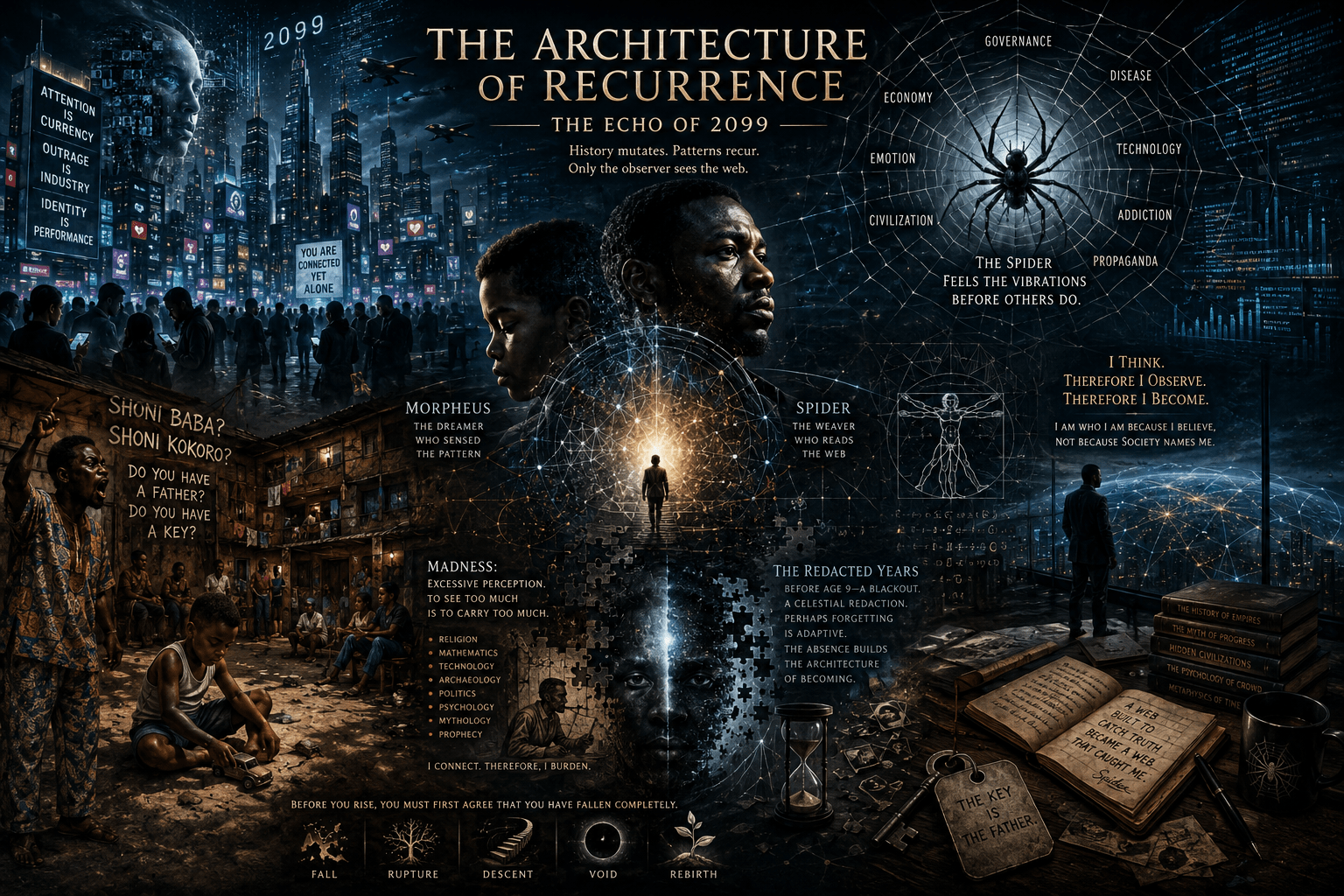
It was the year 2099, though in many ways the world still carried the aftertaste of 1999 like unresolved static trapped inside the nervous system of civilization. The century had changed, the machines had evolved, and humanity had digitized nearly every aspect of existence, yet beneath the polished surfaces of technological advancement remained the same ancient anxieties that governed empires thousands of years earlier. I have come to understand that history never truly advances in the triumphant linear fashion taught by textbooks and politicians; history mutates. Human beings simply rename their obsessions, modernize their instruments, and project old desires onto new architectures. The empire becomes the corporation. The prophet becomes the influencer. The town square becomes the algorithm. Conquest rebrands itself as innovation. Vanity disguises itself as visibility. Loneliness expands into planetary hyperconnectivity. By 2099, civilization had perfected the art of performance so thoroughly that authenticity itself became almost revolutionary. Governments performed stability while collapsing internally beneath corruption and exhaustion. Corporations performed morality while converting human attention into extractive currency. Citizens performed identity through curated projections designed for algorithmic approval. Everyone was connected, yet no one was anchored. Humanity had accumulated information faster than wisdom, speed faster than grounding, and stimulation faster than reflection. The tragedy of that age was not ignorance but overstimulation. People possessed endless access to data yet increasingly lacked the interior silence necessary for understanding. Every individual carried a platform in their hands while simultaneously becoming more estranged from the architecture of their own soul. We documented our lives endlessly while understanding ourselves less and less. By then my eyes had already witnessed chaos, malice, joy, betrayal, collapse, ecstasy, and those unspeakable moments where truth arrives violently enough to permanently rearrange the psychological structure of a human being. It was around 2027 that friends, family members, colleagues, and strangers alike began asking what kind of person I truly was. Some asked sincerely, hoping for explanation. Others asked mockingly, treating me as entertainment or anomaly. How was I able to speak with unsettling confidence about governance, public health, economy, interpersonal hygiene, technological addiction, civilizational instability, and the future movement of humanity itself? Some listened because they desired prognosis. Others listened because they suspected madness. Perhaps both interpretations were correct. A man discussing the psychological atmosphere of 2100 while standing physically in 2026 inevitably appears unstable to those trapped entirely within immediate cycles of survival. Yet history has always depended upon such figures. The astronomer who first mapped the heavens was ridiculed before becoming foundational. The philosopher who questioned empire was poisoned before becoming immortal. The prophet who warned civilization was isolated before becoming scripture. Humanity fears those who arrive psychologically too early to their own century. In my present state of mind, however, the icon of hubris has been almost completely annihilated within me. I no longer believe I am who I am because of the names assigned to me by society. I am who I am because I believe. Existence itself became an act of internal confirmation rather than external validation. I think. Therefore I observe. Therefore I become.
II. THE WEAVER AND THE DREAMER
Morpheus and Spider
Before there was Spider, there was Morpheus. Morpheus was the child who sensed that reality behaved strangely long before possessing philosophical language capable of explaining the sensation. Spider was the man who eventually learned how to navigate the hidden web beneath appearances. Even as a child, I experienced time with unsettling familiarity, as though events arrived already touched by memory before they fully unfolded. I did not experience the future as pure possibility in the ordinary sense; I experienced it as recurrence, continuation, looping architecture disguised as novelty. People I had never met carried the emotional texture of remembrance. Places felt revisited before arrival. Conversations unfolded with the eerie sensation of resuming rather than beginning. By 2027, this pattern recognition transformed from harmless curiosity into social disturbance. People became unsettled by my “prognosis,” not realizing that I was not predicting the future in the mystical sense they imagined. I was observing trajectories. Patterns in governance. Patterns in disease. Patterns in economics. Patterns in emotional behavior. Patterns in technological addiction. Patterns in the cyclical collapse and reinvention of civilizations. The Spider survives because the Spider recognizes vibrations before the rest of the web becomes aware that movement has occurred. Since 2007, after completing high secondary school, I had been called Spider because of my dexterity with numbers, computers, the World Wide Web, and the emerging architecture of social media. Initially the nickname sounded playful, harmless, almost accidental. But over time I began to realize that the name carried prophetic dimensions hidden beneath casual banter. The Spider is fundamentally an observer species. It sits silently at the center while invisible tensions reveal themselves through movement. Every lie vibrates. Every political system vibrates. Every market vibrates. Every civilization eventually exposes itself through instability within the web. By the rise of social media, my ability became impossible to conceal because while others saw entertainment, distraction, and novelty, I saw infrastructure. The digital world was never merely technology to me; it was a planetary nervous system through which humanity externalized consciousness into algorithms. Attention itself became currency. Outrage became industrial resource. Identity became performance optimized for visibility. Most people consumed information unconsciously. I watched information behave. I watched outrage spread like contagion. I watched fear become monetized. I watched loneliness reorganize itself into digital exhibitionism. This became both my gift and my catastrophe because eventually I realized the terrifying paradox beneath all systems of connection: every web is ultimately constructed around a void.
III. THE INDUSTRIALIZATION OF THE SOUL
The Burden of Excessive Perception
By age thirty-three, I had climbed many of the visible ladders society associates with achievement and intellectual legitimacy. Scholarship carried me geographically and psychologically from Ibadan through the United States and parts of Europe. I lectured, researched, observed, absorbed, and continuously expanded the boundaries of my intellectual environment. Yet intellectual movement is not equivalent to psychological peace. The more I studied human beings, the more I realized that civilization publicly punishes deviation while secretly depending upon it for transformation. Society rewards imitation because imitation stabilizes systems, yet every major leap in human history emerges from individuals willing to think beyond accepted psychological borders. My mother recognized fragments of this contradiction long before I did. “You read too much,” she would say. “That is why some people think you are crazy.” But excessive reading was never the true issue. The real issue was excessive integration. I connected too many realities simultaneously. Religion. Mathematics. Technology. Archaeology. Politics. Mythology. Psychology. Prophecy. Most people survive psychologically by compartmentalizing existence into manageable categories. I survived by linking systems together until boundaries dissolved. Eventually the mind pays a price for excessive connection because the one who perceives too many patterns risks becoming consumed by them. This was my Madness. Not madness as pure delusion, but madness as excessive perception. To others, inflation appeared merely as economic inconvenience. To me, it resembled ancient seals opening beneath civilization. To others, cities were infrastructure. To me, cities became living psychological organisms composed of roads, religions, ambitions, fears, markets, invisible tensions, and emotional exchanges flowing beneath concrete surfaces like hidden electrical currents. The Vanquished cannot sustain this level of perception indefinitely. Eventually something collapses. For me, it was memory.
IV. THE PRINCIPLE OF DESCENT
The Redacted Years
Human beings misunderstand transformation because they are addicted to ascension narratives. We worship growth, enlightenment, elevation, and progress as though becoming requires only ambition and optimism. Yet nothing in nature evolves without rupture. Forests require decay before regeneration. Stars require collapse before supernova. Civilizations require crisis before reinvention. Selves require fracture before reconstruction. Morpheus understood this long before Spider accepted it: before you rise, you must first agree that you have fallen completely. My Fall arrived through memory itself. At thirty-three, I can reconstruct conversations from years ago with frightening precision. I remember streets, sounds, emotional atmospheres, smells, tensions, gestures, and psychological textures with almost unnatural clarity. Yet before the age of nine—before the announcement of my father’s death—there exists fragmentation. A blackout. A celestial redaction suspended within consciousness itself. For years I interpreted this absence as tragedy. Now I understand the possibility that forgetting may itself be adaptive. What if the mind erases in order to rebuild? What if absence creates the vacuum necessary for reconstruction? The Vanished leave behind invisible architectures that continue shaping the living long after disappearance. A missing father transforms into philosophy. A missing memory transforms into archaeology. A missing certainty transforms into spiritual hunger. Perhaps identity itself is constructed less by what we remember than by what we spend our lives attempting unsuccessfully to recover.
V. THE FACE-ME-I-FACE-YOU MATRIX
The Landlord’s Key
Before theory, philosophy, prophecy, or metaphysics, there was the compound. A crowded “face me I face you” structure containing more than twenty families breathing inside the same ecosystem of generator smoke, poverty, gossip, survival, laughter, noise, communal improvisation, and shared instability. My mother, Iya Yetunde, moved through this environment not merely as hairstylist but as strategist, provider, negotiator, and protector whose small shop attached to the building like an extension of survival itself. At age three, my universe consisted of corridors, open doors, sand-filled afternoons, shared meals, wandering movement, and greetings offered respectfully to adults whose ages I could not yet measure but whose authority I instinctively understood. “Aunty Bisi, ẹ káàsán.” I entered rooms freely, ate from different plates, played across households, and moved through the compound as though the entire structure functioned as one fragmented organism. Privacy was luxury. Community was necessity. Yet even then I sensed displacement within myself, as though a portion of my consciousness existed slightly outside the emotional frequency everyone else occupied. Then came the moment I now recognize as foundational. The landlord entered Pentecostal frenzy and shouted into the corridor with terrifying spiritual intensity: “Shoni baba? Shoni kokoro?” — “Do you have a father? Do you have a key?” To the adults surrounding me, the outburst appeared merely as ecstatic religious performance. To me, it became code. Those words entered my consciousness like encrypted prophecy because even as a child I sensed the horrifying possibility that the question of the Father and the question of the Key were somehow identical questions disguised as separate inquiries. If I lacked one, I would spend my life searching for the other. That moment became the true birth of Spider. My pattern recognition emerged directly from fragmentation itself. I began constructing meaning from tension, weaving psychological structures capable of explaining the world surrounding me. Only much later did I understand the central paradox governing my existence: the same mind that allowed me to navigate complexity also imprisoned me within it. The Spider built a web to capture truth, but eventually the Spider became the one caught inside the web.

