

Picture this! You stand in the midst of an age-old Yoruba cityscape as twilight creeps over the horizon. The simmering West African sun paints the sky in hues of purple and gold, giving way to a resplendent celestial panorama. You sense an ancient connection, a dialogue between earth and sky, culture and cosmos, echoed in the alignment of structures around you and the whispering tales of oral tradition. What you are experiencing, in essence, is the intriguing field of archaeoastronomy.

Now, what exactly is archaeoastronomy, you might ask? A somewhat unusual word that appears as though a pair of academic disciplines – archaeology and astronomy – collided in a high-speed lexicon collision. Archaeoastronomy explores how past cultures perceived, interacted with, and were influenced by celestial bodies and phenomena. It is the key that allows us to unlock the secrets of ancient skies and interpret the celestial narratives that shaped numerous civilizations, the Yoruba included.
The Yoruba, with a vibrant history dating back over a thousand years, are primarily located in what we now know as southwestern Nigeria. Their cities, aglow with tales of yesteryears, bear testimony to a profound comprehension of celestial mechanics. The archaeological whispers of these cities, captured in potsherd pavements, building alignments, and oral traditions, reveal a celestial connection as profound as it is poignant.
Now, why are potsherd pavements fascinating? These features common in the Yoruba urban architecture – a quilt of broken pottery and pebbles – hold within them a thousand stories of the cosmos. Far from mere decorative or utilitarian constructs, these pavements served as sundials, cartographic maps, and naturalistic art objects, creating an extraordinary interplay of light, shadow, and symbolism.
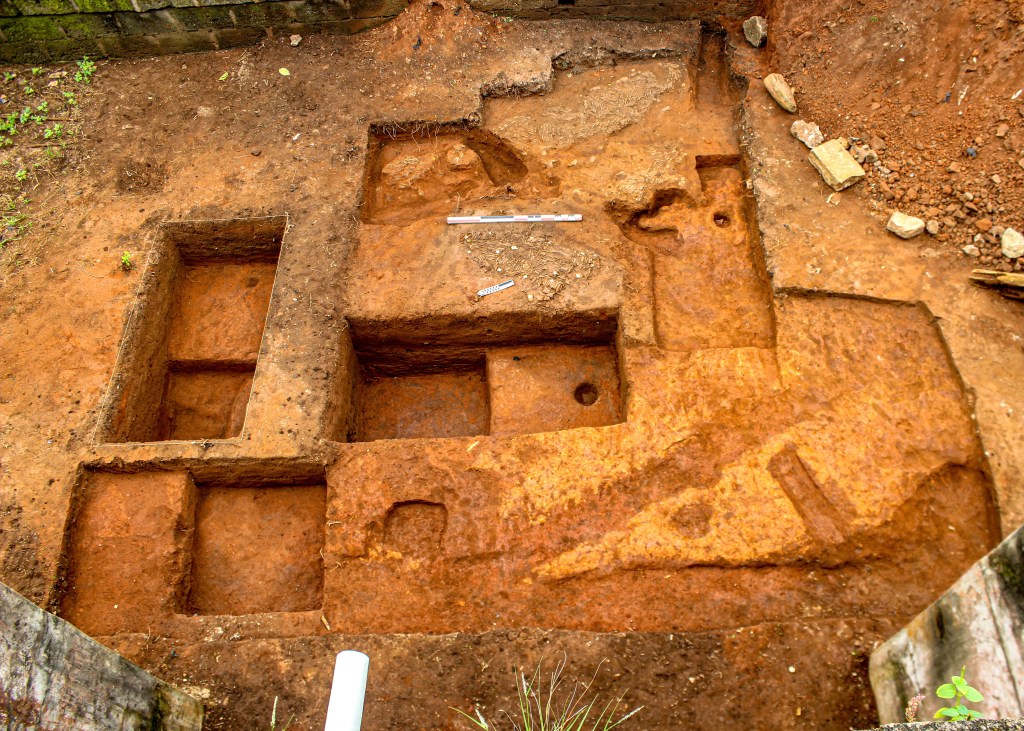
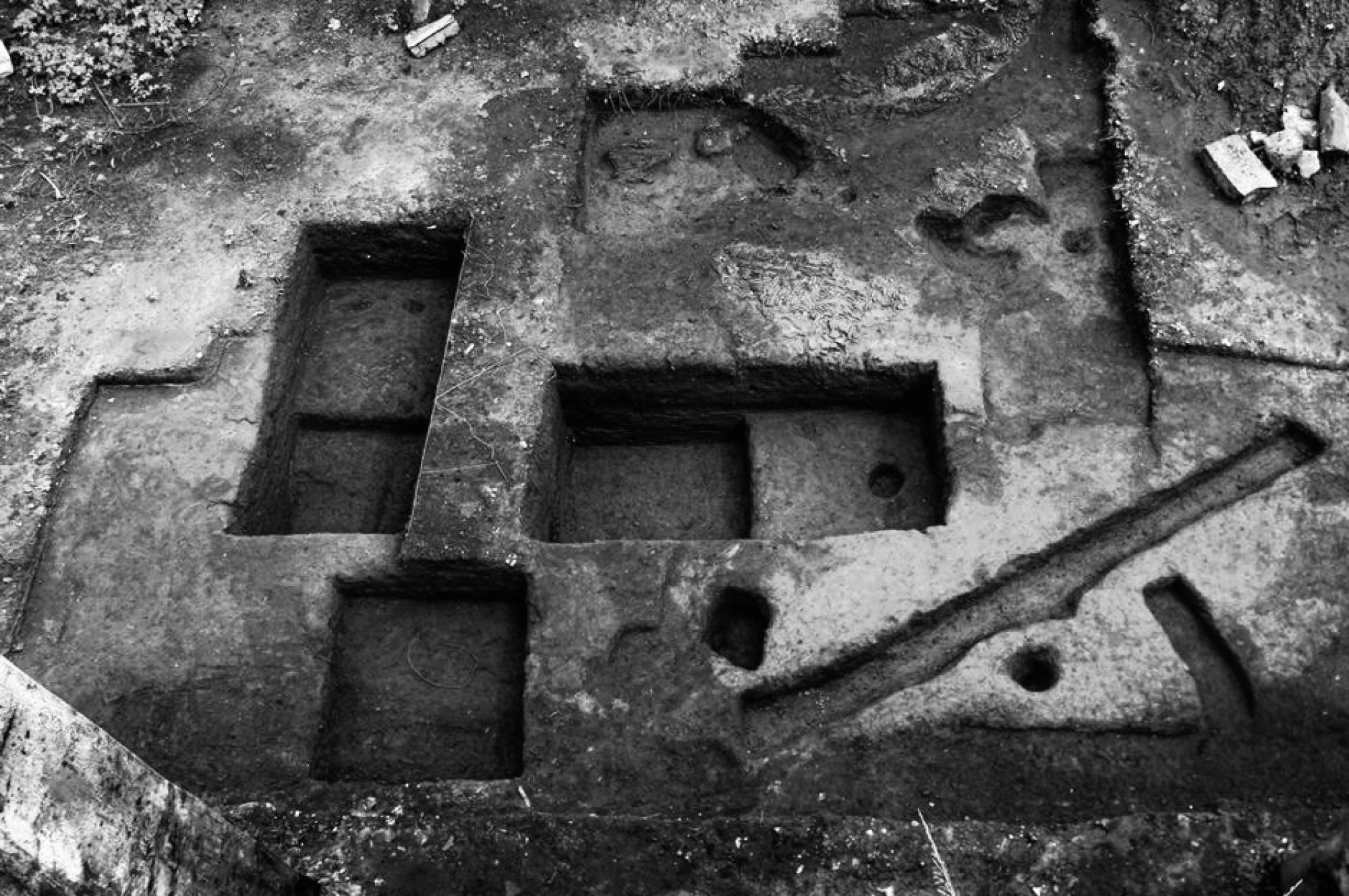
Excavation of a Geometric Pavement with vertices aligned to the solstices. ©OlanrewajuLasisi
Sundial Pavement. ©OlanrewajuLasisi
To fully appreciate the depth of Yoruba archaeoastronomy, one needs to wear the lens of indigenous cosmology. Each pattern on potsherd pavements, each structural orientation, becomes an open book detailing their cosmic understanding, timekeeping, and ritual practices. The Yoruba cosmos, you see, wasn’t a remote, inaccessible domain but a tangible presence in daily life, a celestial dance that blended seamlessly with earthly existence.
The understanding of time, space, and the human role in the cosmic effect was deeply woven into Yoruba society. Their cities, their routines, their ceremonies, and even their artistry were aligned with celestial rhythms. Their perception of the cosmos was not a segregated element stored away for esoteric rituals or elite scholars; instead, it permeated their everyday existence, forming the bedrock of their social, spiritual, and cultural lives.
Discovering these celestial narratives in Yoruba archaeology reminds us of the richness of human history and the many ways we have tried to make sense of our universe. The field of archaeoastronomy lets us step into the shoes of our ancestors if only for a fleeting moment, to gaze upon the same skies that they once did, albeit through a lens shaped by millennia of culture, wisdom, and tradition.
Yoruba archaeoastronomy is a song of the past that continues to resonate today, revealing ancient wisdom and offering insight into a people who found a harmonious balance between earth and sky, physical and spiritual, human and divine. In this song, we find a shared melody, a cosmic harmony that resonates within all of us, no matter where we are from or where we are heading.
The sky, dear reader, is not just a realm of distant stars and galaxies. It’s a mirror reflecting our past, present, and future, our fears, hopes, and dreams, and our attempt to understand our place in the grand cosmic theatre. As we continue to unearth these celestial narratives, we bridge the earth and sky, bringing us a step closer to the harmonious symphony of human existence.
Remember, each time you look up at the night sky, you are not just an observer; you are a participant in a celestial narrative that has been unfolding since the dawn of time. And in that realization, isn’t there a sense of wonder, a sense of connection, a sense of being part of something larger than ourselves?
I trust this extended journey into the Yoruba’s cosmic past resonates with you. Our quest to understand our ancestors and ourselves is a shared voyage – a voyage into the heart of humanity, etched not only on the canvas of the earth but also on the canvas of the sky. As we continue to navigate this journey, let’s remember – we are all under the same ancient sky, the same sky that bore witness to our shared story, the story of us.
 OLANREWAJU LASISI